

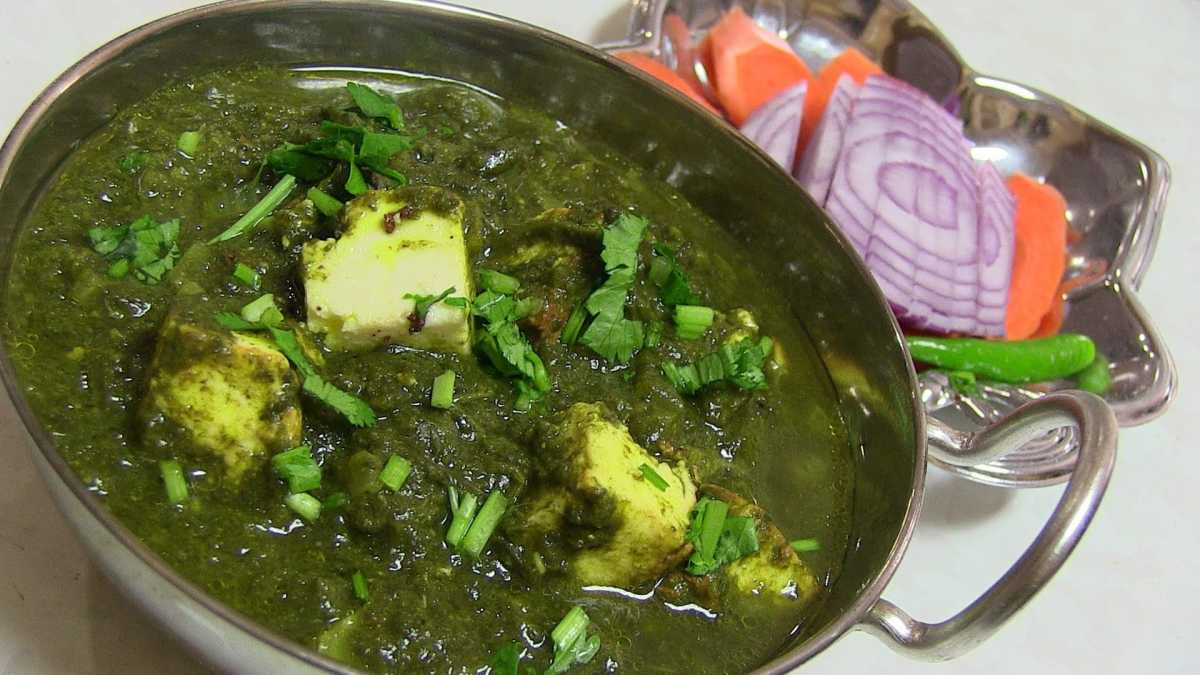
This Palak Paneer recipe gives you the vibrant green, velvety spinach gravy with soft paneer that you get at a good North Indian restaurant — done in 35 minutes at home. The colour, the texture, and the flavour all depend on one technique: blanching the spinach correctly and not overcooking it after. Get that right and everything else follows easily.
Palak Paneer is one of the most nutritious dishes in Indian cuisine — spinach is rich in iron, folate and Vitamin K, while paneer provides protein and calcium. It is a regular on weeknight dinner tables across India and a favourite at restaurants worldwide.
The Most Important Technique: Blanching Spinach
Most home versions of Palak Paneer fail for one reason: the spinach turns a dull, murky olive green instead of staying vibrant. This happens because the spinach is either not blanched at all, or blanched but left to cool slowly.
The solution is simple: blanch for exactly 2 minutes in boiling salted water, then immediately plunge into ice-cold water. The cold water stops the cooking instantly, preserving the chlorophyll that gives spinach its bright green colour. This single step is the difference between restaurant-quality Palak Paneer and home-made that looks grey.
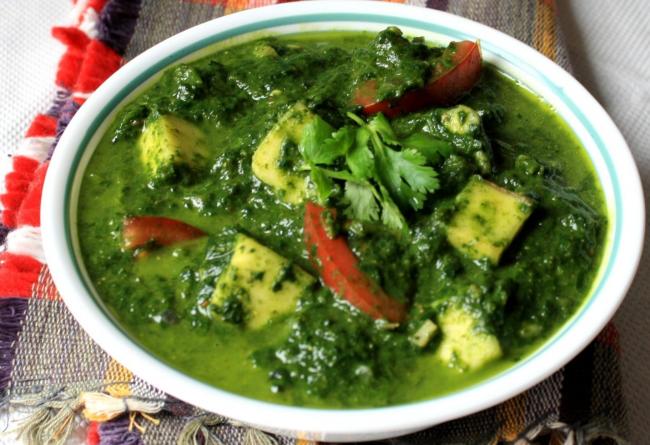
Ingredients and Why Each One Matters
Fresh spinach (palak) — Fresh spinach gives the best flavour and colour. Baby spinach works well too. Frozen spinach can be used in a pinch — thaw and squeeze out excess water before blending, but skip the blanching step since it is already cooked.
Green chillies — Blended with the spinach rather than added to the masala. This gives a clean, fresh heat that integrates into the sauce rather than sitting on top.
Cumin seeds (whole) — Tempered in hot fat before the onions go in. They pop and release a nutty, earthy aroma that is the backbone of the dish’s flavour.
Lemon juice at the end — A small amount of acid brightens the flavour and also helps maintain the green colour. Add it at the very end, off the heat.
Cream — Optional but recommended. Even 2 tbsp rounds off the slight bitterness of spinach and adds a silkiness to the sauce. Can be replaced with a spoonful of yogurt added off the heat.
Palak Paneer Recipe — Step by Step
Step 1 — Blanch the Spinach
Bring 4 cups of water to a rolling boil in a pot. Add ½ tsp salt. Drop in all the washed spinach leaves and push them under the water with a spoon. Set a timer for exactly 2 minutes. The spinach will wilt almost immediately — the full 2 minutes ensures it is soft enough to blend smoothly.
Drain immediately into a colander. Transfer to a large bowl of ice-cold water (add ice cubes if needed). Leave for 1–2 minutes until completely cooled. Drain well and transfer to a blender with the slit green chillies and 2 tbsp of water. Blend until completely smooth — 1–2 minutes on high. Set the green puree aside.
Step 2 — Fry the Paneer
Heat 1 tbsp butter in a non-stick or heavy pan over medium-high heat. When hot, add paneer cubes in a single layer. Fry without moving for 2 minutes until golden on the bottom. Flip each piece and fry 1 minute more. Remove to a plate. This step is optional but strongly recommended — fried paneer holds its shape better and develops a slight crust that absorbs the spinach gravy without becoming mushy.
Step 3 — Cook the Masala Base
In the same pan heat the remaining 1 tbsp butter and oil. When hot, add cumin seeds. They will splutter within 30 seconds — this is the signal to add the onions. Cook onions on medium heat for 7–8 minutes until golden. Add ginger-garlic paste, cook 2 minutes.
Add the chopped or pureed tomatoes, coriander powder, cumin powder and turmeric. Cook on medium heat for 8–10 minutes, stirring regularly, until the tomatoes are completely broken down, the mixture is dry, and the oil begins to separate at the edges.
Step 4 — Add the Spinach Puree
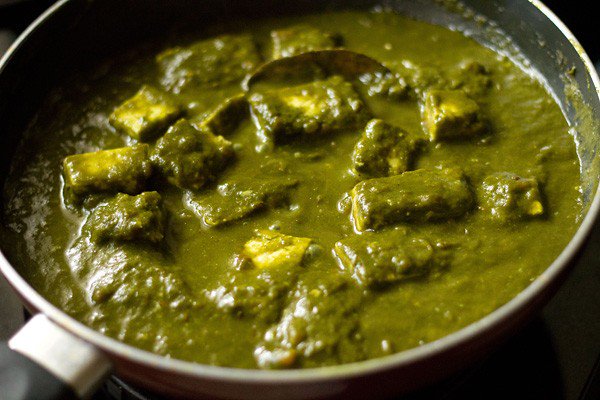
Reduce heat to low. Add the spinach puree and stir to combine with the masala. Cook on low-medium heat for 5–6 minutes only — this is enough to cook through and meld the flavours. Do not cook further. The longer spinach cooks after blending, the more its colour fades from bright green to dull olive. If the gravy is too thick, add ¼–½ cup warm water.
Step 5 — Add Paneer and Finish
Add the fried paneer cubes to the spinach gravy. Stir gently. Cook on low heat for 3–4 minutes — just enough to heat the paneer through. Stir in fresh cream, garam masala and lemon juice. Taste and adjust salt. Serve immediately for the best colour and flavour.
Tips for the Best Palak Paneer
- Serve immediately — Palak Paneer is best eaten right after cooking. As it sits, the heat causes the spinach to continue cooking and the colour gradually dulls. If making ahead, under-cook the spinach step slightly
- Do not use a lid while cooking spinach — covering the pan traps steam and speeds up the colour loss. Cook uncovered on low heat
- Blanching water ratio matters — use plenty of water (4+ cups for 500g spinach). Insufficient water causes the temperature to drop when spinach is added, extending the blanching time and dulling the colour
- Room temperature paneer vs cold — if using refrigerated paneer, soak it in warm water for 10 minutes before adding. Cold paneer straight from the fridge lowers the sauce temperature and takes longer to heat through
Variations
Saag Paneer — Uses a mix of spinach and mustard leaves (sarson) or fenugreek leaves (methi). The result is more pungent and earthy than pure palak paneer. Replace 100g of spinach with mustard leaves or fresh methi. Blanch together with the spinach.
No-cream version — Skip the cream entirely and stir in 2 tbsp thick yogurt at the very end, off the heat. This adds tang rather than richness but keeps the dish lighter. Do not add yogurt while still on heat — it will curdle.
Palak Tofu (Vegan) — Replace paneer with firm tofu pressed dry and cut into cubes. Replace butter with oil and skip the cream. The spinach gravy is naturally vegan; only the finishing elements change.
Storage and Reheating
- Refrigerator — up to 3 days. The colour will dull slightly; this is normal
- Freezer — up to 2 months. Freeze without cream; add fresh cream when reheating
- Reheating — on the stovetop over low heat with 2–3 tbsp water. Do not microwave on high heat — it kills the colour further and makes the paneer rubbery
What to Serve with Palak Paneer
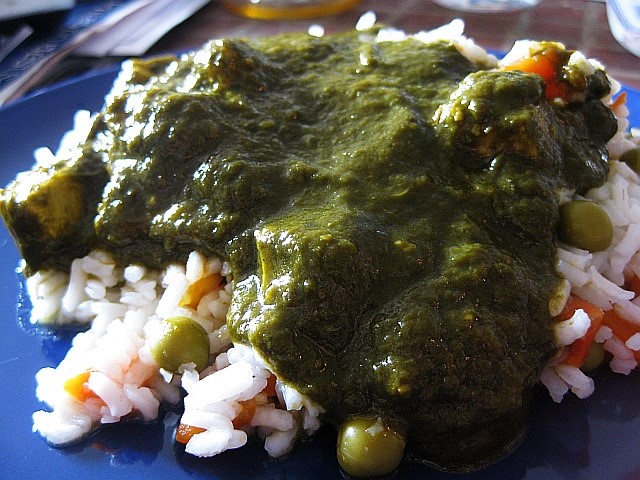
- Tandoori roti or phulka — the mild, earthy flavour of whole wheat roti complements the spinach perfectly; this is the most common everyday pairing
- Butter naan — richer and softer; the classic restaurant pairing
- Steamed basmati rice — the clean flavour works beautifully with the savoury spinach gravy
- Alongside Dal Makhani and Paneer Butter Masala — this trio is the most complete North Indian vegetarian spread you can serve at a dinner party
Frequently Asked Questions
Why is my palak paneer not green?
Three possible reasons: spinach was not blanched before blending, it was overcooked after adding to the masala, or it was not cooled in ice water after blanching. All three steps are required for a bright green result. See the blanching section above.
Can I use frozen spinach?
Yes. Thaw completely, then squeeze out as much water as possible. Skip the blanching step and blend directly. The colour will be slightly less vibrant than fresh spinach but the flavour is good. You need about 300g frozen spinach to replace 500g fresh.
How do I make palak paneer in a pressure cooker?
Blanch the spinach separately as described. Build the masala in the open pressure cooker pot. Add the spinach puree. Do not pressure cook at this stage — just simmer open for 5 minutes. Add paneer and finish as in Step 5. Pressure cooking the spinach puree destroys the colour and flavour.
Is palak paneer and saag paneer the same?
Not exactly. Palak specifically means spinach; saag means leafy greens in general and can include mustard leaves, fenugreek, or a mix. Palak Paneer is made with pure spinach. Saag Paneer is typically a Punjabi winter dish made with a mix of greens, and has a more pungent, complex flavour.
Can I add paneer without frying it?
Yes. Raw paneer can be added directly to the sauce. Soak the cubes in warm salted water for 10 minutes first to soften them. The result is softer and creamier; the trade-off is that raw paneer tends to crumble more in the gravy.


