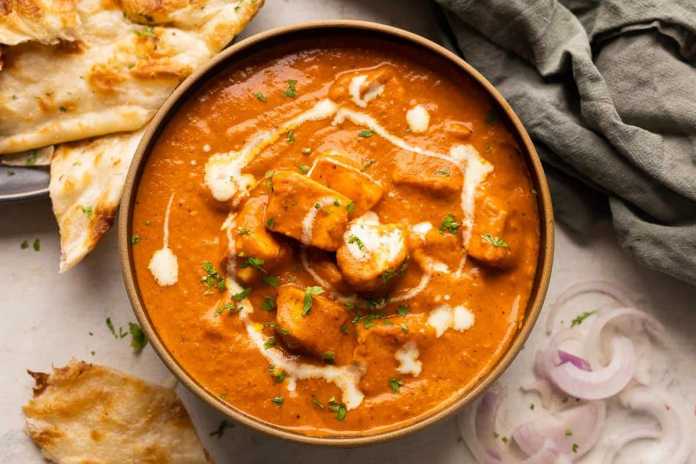
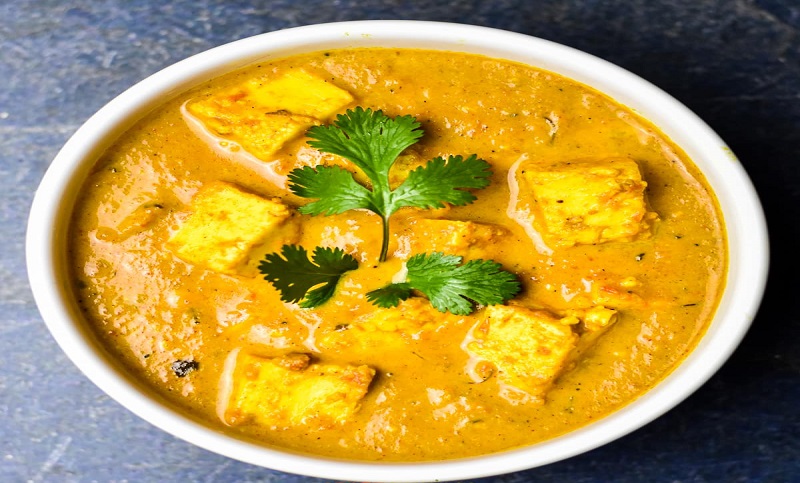
Paneer Butter Masala — also called Paneer Makhani — is the vegetarian twin of Butter Chicken. Same makhani sauce, same rich creamy texture, same deep orange-red colour. If you can make one, you can make the other. This recipe gives you the exact restaurant result at home in 40 minutes.
It is the most-ordered paneer dish at North Indian restaurants and a staple at every occasion from family dinners to weddings. The key is the makhani base: a blended-and-strained tomato-cashew sauce that is silky, mildly sweet, and deeply savoury all at once.
Paneer Butter Masala vs Shahi Paneer — What Is the Difference?
A common point of confusion. Paneer Butter Masala uses a tomato-forward makhani base brightened with Kashmiri red chilli — it is vibrant orange-red, mildly spiced, and tangy. Shahi Paneer uses a white onion-cashew base with no tomatoes — it is pale ivory, richer, and subtly sweet with whole spices. Both are restaurant classics; this recipe covers Paneer Butter Masala specifically.
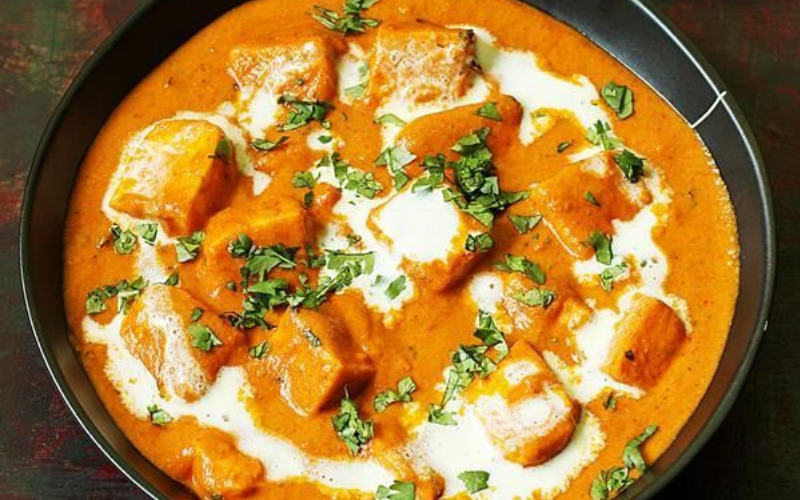
Ingredients and Why Each One Matters
Kashmiri red chilli powder — Gives the characteristic deep orange-red colour with mild heat. Do not substitute with regular red chilli. If unavailable, use ¾ tsp paprika + ¼ tsp regular chilli powder.
Cashews — Soaked and blended into the sauce, they replace cream in the base and give it body and richness without heaviness. Skip only if nut-free; the sauce will be slightly thinner.
Lightly fried paneer — Frying the paneer in butter before adding to the gravy creates a golden crust that prevents it from crumbling and absorbs the sauce without becoming mushy. Do not skip this step.
Kasuri methi — The finishing touch that makes it taste like a restaurant. Added at the very end, crushed between the palms. This is the single most important flavour note in the dish.
Blend and strain — This is what separates restaurant-smooth gravy from home-style gravy. The straining step removes onion fibres and seeds, leaving only a perfectly velvety sauce. It takes 2 extra minutes and makes all the difference.
Paneer Butter Masala Recipe — Step by Step
Step 1 — Lightly Fry the Paneer
Heat 1 tbsp butter in a wide pan over medium-high heat. When the butter is hot and foamy, add paneer cubes in a single layer. Leave undisturbed for 2 minutes until the bottom is golden. Flip and fry 1 minute more. Remove to a plate and keep aside. The paneer should be golden on two sides but still soft inside — overcooked paneer turns rubbery.
Tip: If using fresh soft paneer, dip the cubes briefly in warm salted water for 5 minutes before frying. This firms it up and prevents crumbling.
Step 2 — Cook the Onion Base
In the same pan, add 1 tbsp butter and 1 tbsp oil over medium heat. Add chopped onions. Cook for 8–10 minutes until golden brown, stirring occasionally. The colour of the onions determines the depth of the final gravy — pale onions give a sharp, under-cooked taste. Golden onions give sweetness and body.
Add ginger-garlic paste and cook for 2 minutes until the raw smell disappears completely.
Step 3 — Add Tomatoes and Spices
Add the tomato puree along with Kashmiri red chilli powder, coriander powder, cumin powder and turmeric. Stir everything together. Cook on medium heat for 10–12 minutes, stirring every 2 minutes. The masala is ready when the oil visibly separates from the paste and pools at the sides. The colour will shift from bright red to a deeper, richer orange-red.
Step 4 — Blend and Strain
Turn off the heat and allow the masala to cool for 5 minutes. Transfer to a blender, add the soaked cashews and 2 tbsp water. Blend for a full 2 minutes on high speed until completely smooth. Pour through a fine mesh strainer back into the pan, pressing firmly with the back of a spoon to extract all the sauce. Discard the solids left in the strainer — mainly onion fibre and tomato skin. What remains in the pan is a perfectly smooth makhani base.
Step 5 — Add Paneer and Cream
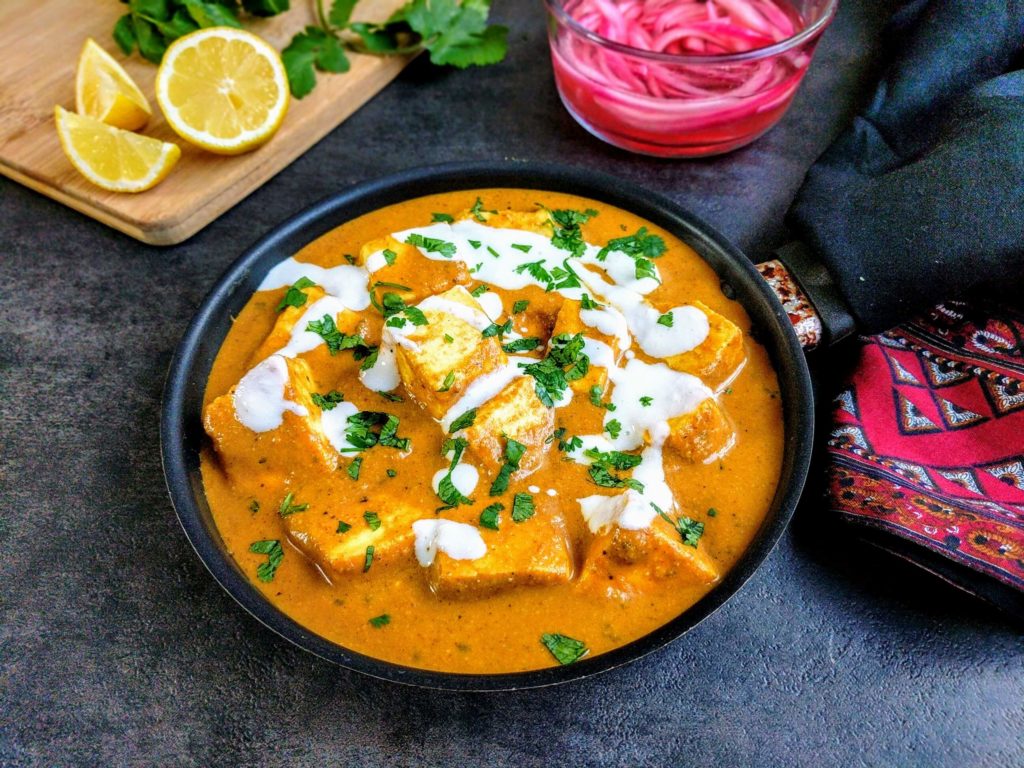
Add ½ cup water to the strained sauce and bring to a gentle simmer. Add the fried paneer cubes. Cook on low-medium heat for 8–10 minutes, stirring gently so the paneer does not break. Add the fresh cream, sugar and remaining 1 tbsp butter. The butter will melt and give the sauce a beautiful gloss.
Step 6 — Finish and Serve
Crush kasuri methi between your palms directly over the pan — you will smell the difference immediately. Add garam masala. Taste and adjust salt. Simmer for 2 more minutes on the lowest heat. Serve in a bowl with a swirl of cream and fresh coriander leaves scattered on top.
Tips for the Best Paneer Butter Masala
- Fresh paneer beats packaged — if you have access to freshly made paneer, use it. It absorbs the gravy better and stays soft. Hard packaged paneer can be softened by soaking in warm water for 10 minutes before cooking
- Do not boil after adding cream — stir in cream off the heat or on the very lowest flame. High heat after adding cream causes it to split and look curdled
- The straining step is not optional — every minute spent straining pays off in a noticeably smoother, more restaurant-like result
- Add paneer at the end — paneer does not need to cook, only heat through. Long cooking makes it tough and rubbery
Variations
Paneer Tikka Butter Masala — Marinate paneer in yogurt, chilli powder, cumin and ginger-garlic paste for 30 minutes, then grill or pan-char until lightly blackened before adding to the makhani sauce. The smoky tikka paneer elevates the dish significantly.
Vegan version — Use firm tofu instead of paneer (press dry, cut into cubes), vegan butter, and coconut cream instead of dairy cream. The makhani sauce is naturally vegan — only the finishing elements need swapping.
Extra spicy — Add 1 finely chopped green chilli with the onions and increase Kashmiri chilli to 1½ tsp. The heat level goes from mild to medium without losing the characteristic flavour.
Storage and Reheating
- Refrigerator — up to 4 days in an airtight container. Paneer firms up in the fridge — this is normal
- Freezer — up to 2 months. Thaw overnight in fridge. Note: paneer texture changes slightly after freezing; it becomes more crumbly
- Reheating — reheat on the stovetop with 2–3 tbsp water on low heat. Finish with a small knob of butter to revive the gloss
What to Serve with Paneer Butter Masala
- Butter naan or garlic naan — the richness of the gravy is perfectly balanced by the soft, pillowy naan
- Tandoori roti — a healthier, equally good pairing
- Steamed basmati rice — the clean flavour of rice balances the richness of the makhani gravy
- Alongside Dal Makhani — this combination is the most complete North Indian vegetarian meal you can put on the table
Frequently Asked Questions
Can I make paneer butter masala without cream?
Yes. Replace fresh cream with thick coconut milk (same quantity) for a dairy-free version, or use full-fat yogurt stirred in off the heat. Both work well; coconut milk is the closest in richness.
Why is my paneer butter masala gravy too thin?
Two likely reasons: the masala was not cooked long enough (oil should visibly separate), or the cashews were not used. Fix: mix 1 tsp cornflour in 2 tbsp cold water, stir into simmering gravy and cook 2 minutes.
Can I use tomato ketchup instead of fresh tomatoes?
Not recommended — ketchup adds sugar and vinegar that make the sauce sweet and tangy in an artificial way. Use canned tomato puree if fresh tomatoes are not available. It works well and is closer to the real result.
Is paneer butter masala the same as paneer makhani?
They are essentially the same dish. “Paneer Makhani” (buttery paneer) describes the same recipe; different restaurants use different names. Some restaurants have marginal differences in spice levels, but the base recipe is identical.
Can I make this without a blender?
Yes, using an immersion/stick blender directly in the pan. Blend thoroughly and pass through a strainer. Alternatively, skip blending and cook longer — the gravy will be chunkier but still delicious. The texture just won’t be restaurant-smooth.